Two servers work the same section on the same night. One goes home with noticeably more in tips. The difference usually isn’t personality. It’s knowing when to suggest something, and how to say it.
Forget the word “upselling”. Guests don’t want to be sold to. They want a server who knows the menu and helps them have a better meal. A bigger check is simply what happens when guests get more of what they’d enjoy anyway.
Here are the five moments in every meal where a good suggestion makes the difference, and the words to use.
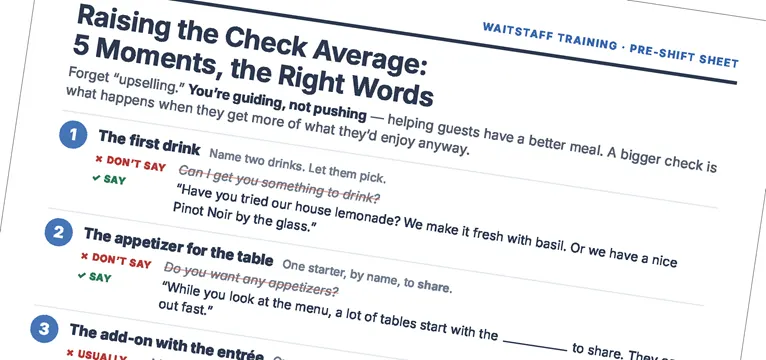
1. The first drink
“Can I get you something to drink?” gets “Water’s fine.” Name two specific choices instead:
“Have you tried our house lemonade? We make it fresh with basil. Or we’ve got a nice Pinot Noir by the glass.”
2. The appetizer for the table
When you drop the drinks, suggest one starter, by name, to share:
“While you look at the menu, a lot of tables start with the crab cakes to share. They come out fast.”
Avoid “Do you want any appetizers?” A yes-or-no question invites the easy answer: no. And share matters: one plate, four forks, and nobody feels they over-ordered.
3. The add-on with the entrée
Listen for the one small upgrade that makes the dish better, and offer just that one:
- Salad: “Would you like grilled chicken or shrimp on that?”
- Steak: “Our sautéed mushrooms go great with that.”
- Burger: “Add bacon?”
4. Dessert
“Did you save room for dessert?” is the question most likely to get a no. Describe one while you clear the plates:
“Our bread pudding is warm, with bourbon caramel. It’s big enough for two if you want to split one.”
If you can, show it. A dessert tray or a photo sells more than any description.
5. Coffee or an after-dinner drink
With dessert, offer something to go with it:
“Can I bring you a coffee with that, or a cappuccino?”
It pairs naturally with dessert, and it keeps guests comfortable while you run the card.
Four rules that make it work
- Be specific. Name the dish. “An appetizer” sells nothing; “the crab cakes” does.
- Describe it in a few real words. Warm, crispy, fresh, house-made.
- Offer two choices, not yes or no.
- Read the table. A couple rushing to a movie wants speed; a birthday table wants the works. One “no” means stop.
Why it matters to servers
Say a four-top adds one shared appetizer and two desserts: about $30 more on the check. At a 20% tip that’s $6 more from one table, and about $30 a night across five tables. The guests had a better meal, and the server earned more for saying the right words at the right moment.
Try it tonight
Pick one moment, maybe the appetizer for the table, and use the words above. Managers: Print the one-page pre-shift sheet / Versión en español: Hoja para antes del turno and go over it before service.
Run a restaurant? everything-foodservice is free for Sysco customers: training like this, plus the products and manufacturers behind your menu. Join free.